All content on The Global Library of Women’s Medicine is freely accessible to everyone, anywhere in the world, with no registration required. We are committed to keeping it that way. You can help us better understand our audience by providing the information below:
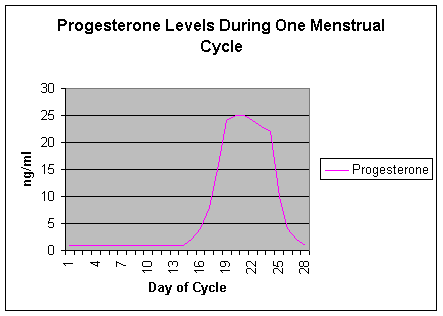
Progesterone is a female hormone, produced primarily in the ovary, primarily during the second half ("luteal phase") of the menstrual cycle. Men also produce progesterone, but only very small amounts.
Shortly after ovulation, progesterone levels rise quickly and remain elevated for about 10 days.
If pregnancy occurs, the progesterone levels remain elevated.
If pregnancy does not occur, then progesterone levels fall, provoking a menstrual flow.
Progesterone levels are sometimes used to evaluate a possible ectopic pregnancy:
If progesterone > 25, ectopic pregnancy is very unlikely
When less than 25, the results are not conclusive either way.
*These are general values taken from a variety of sources. The actual normal values may vary from lab to lab and from one type of testing protocol to another.